Philosophy / Values
Value Creation Based on NOF's Three Values

Three Values
NOF’s Three Values Supporting the Solving of Social Issues
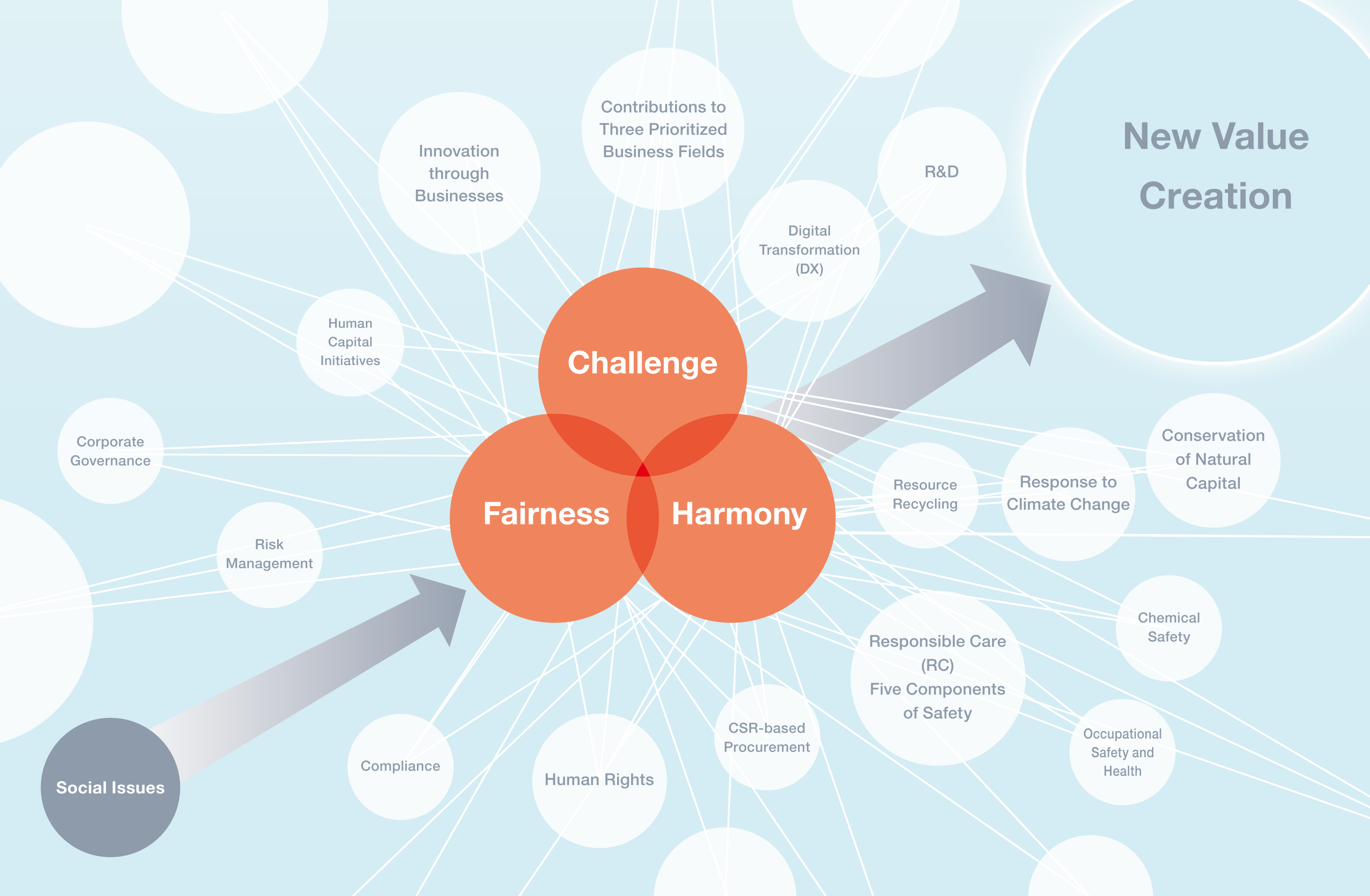
The NOF Group has established “Challenge,” “Fairness,” and “Harmony” as the three values prioritized across the entire Group.
Challenge refers to
“We continue to grow into our best selves through collaboration and mutual inspiration, undauntedly adapt to new realities, and tirelessly
pioneer new frontiers.”
Fairness refers to
“As responsible members of society, we maintain high ethical standards, act in good faith, and cultivate a corporate culture that embraces
diverse values.”
Harmony refers to
“We join forces to build a sustainable future in harmony with the global environment while keeping in mind safety and mutual respect.”
The NOF Group aims to create new value through the synergy of these three values.
“Challenge” × R&D
The NOF Group will take on the challenge of developing new products and technologies.
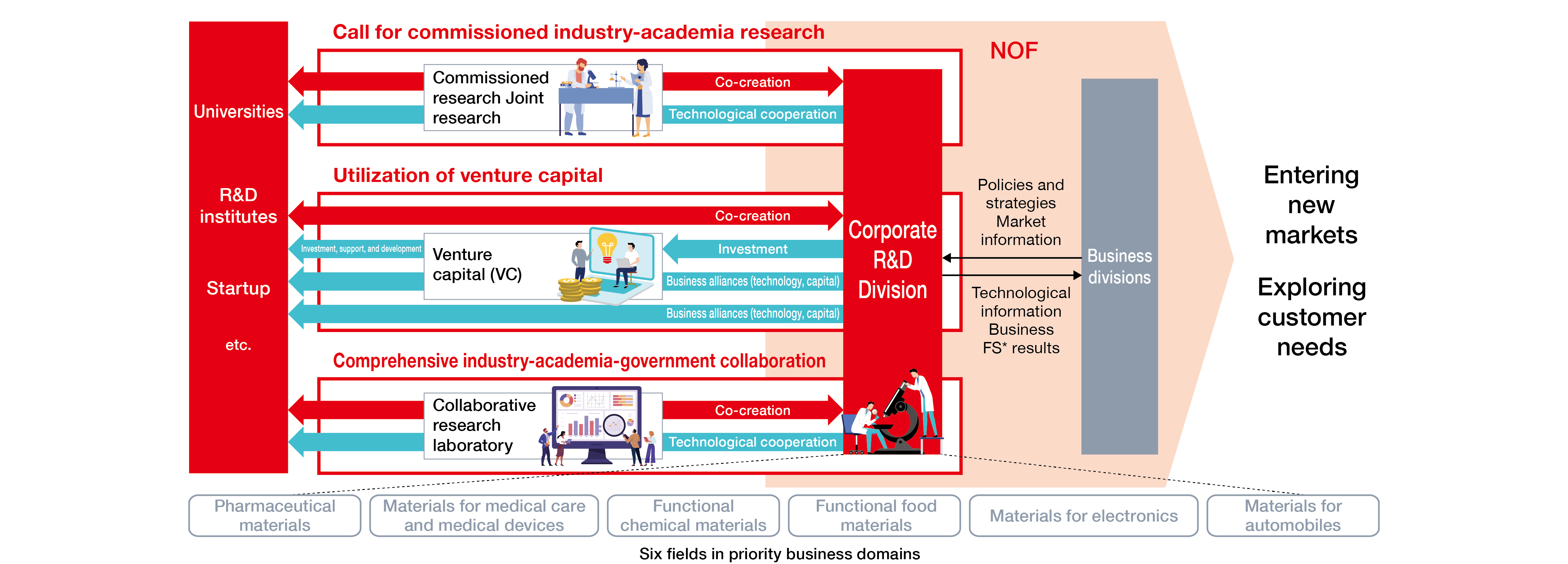
We will promote open innovation through public calls for research applications, industry-academia-government collaboration, and other co-creation with external parties, to open up new business domains in each of the markets where needs are expected to grow.
We will create new businesses and take on the next stage to shape the future of society
and the NOF Group.
General Manager of Corporate R&D Division, Director and Executive Operating Officer,
Doctor of Engineering
Eui-Chul Kang
Tackling new challenges for NOF Vision 2030
The NOF Group has formulated a Mid-term Management Plan, NOF VISION 2030, and positioned the 2025 Mid-term Management Plan, which started in FY2023, as the expanding profit stage and the 2028 Mid-term Management Plan as the business domains expansion stage in order to expand our businesses toward our vision for FY2030. In R&D, we have set a target of accelerating the development of new products and technologies through strategic investments in the three target areas of “Life/Healthcare,” “Environment/Energy,” and “Electronics/IT.”
To achieve this, we have selected new priority business domains based on our basic strategy of creating new businesses in growth market fields by introducing new technologies with market advantages, with a focus on co-creation with startup companies and comprehensive industry-academia collaboration.
Strengthening market competitiveness in six priority fields
As priority business domains, we have selected six fields (pharmaceutical materials, materials for medical care and pharmaceutical devices, functional chemical materials, functional food materials, materials for electronics, and materials for automobiles) in which we will make concentrated investments. Further intensification of market competition is expected in each field. In respect of industry-academia-government collaboration and co-creation with venture capital (VC), we promote R&D focused on these six fields.
For pharmaceutical materials and materials for medical care and medical devices, we are establishing systems for R&D and commercialization to enter the regenerative medicine field early, where significant growth is expected. For functional chemical materials, we will promote initiatives for a sustainable society, including manufacturing biochemicals using biomass and microbial culture technologies. We are regularly investigating new functional food materials with the goal of developing materials for health food that are effective in the four fields of beauty, lifestyle diseases, immunity, and brain function, so that all people can live healthy lives. For electronics materials, we are developing new materials for commercialization, including materials for semiconductors and high-speed communications.
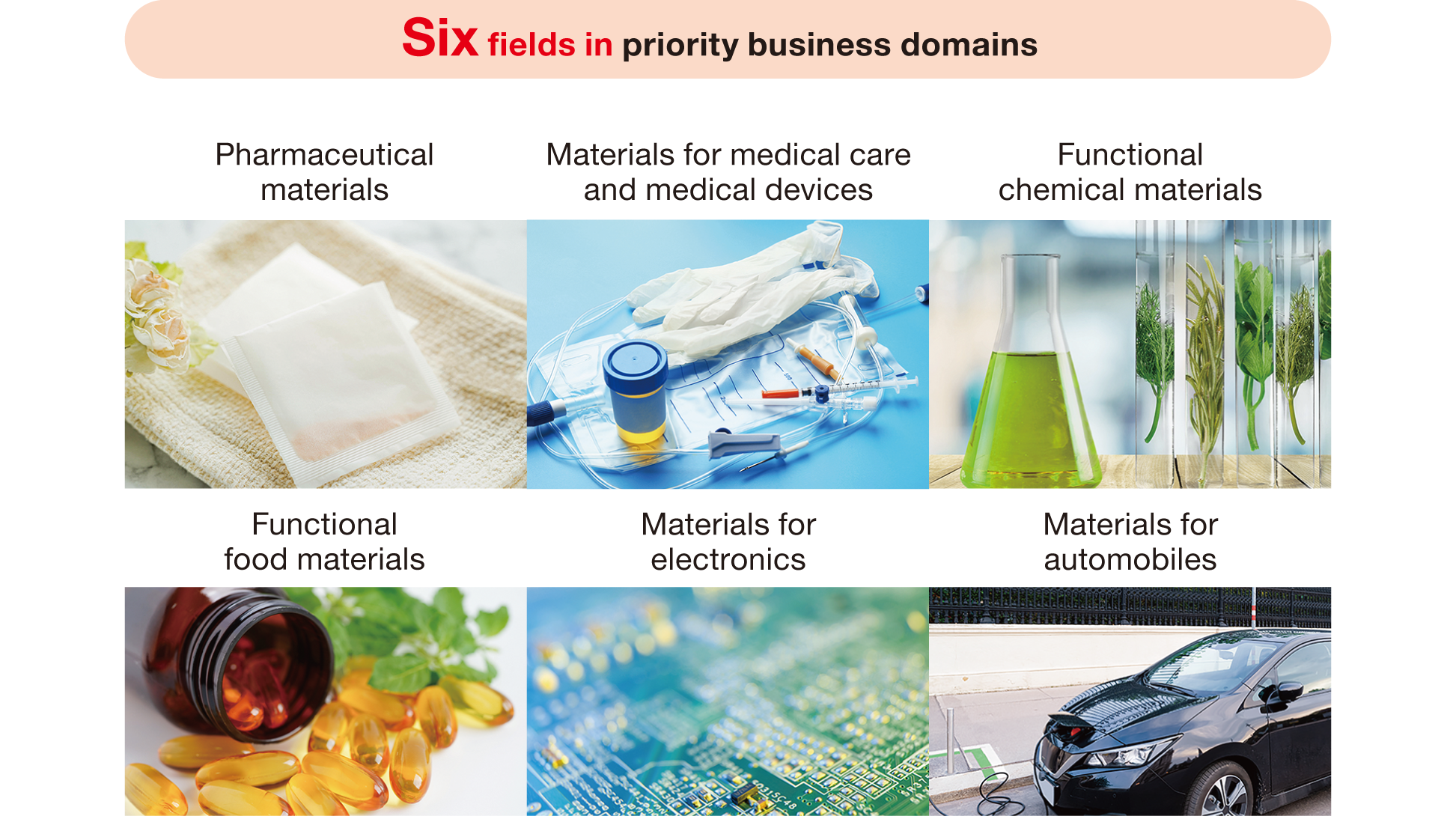
Six fields in priority business domains
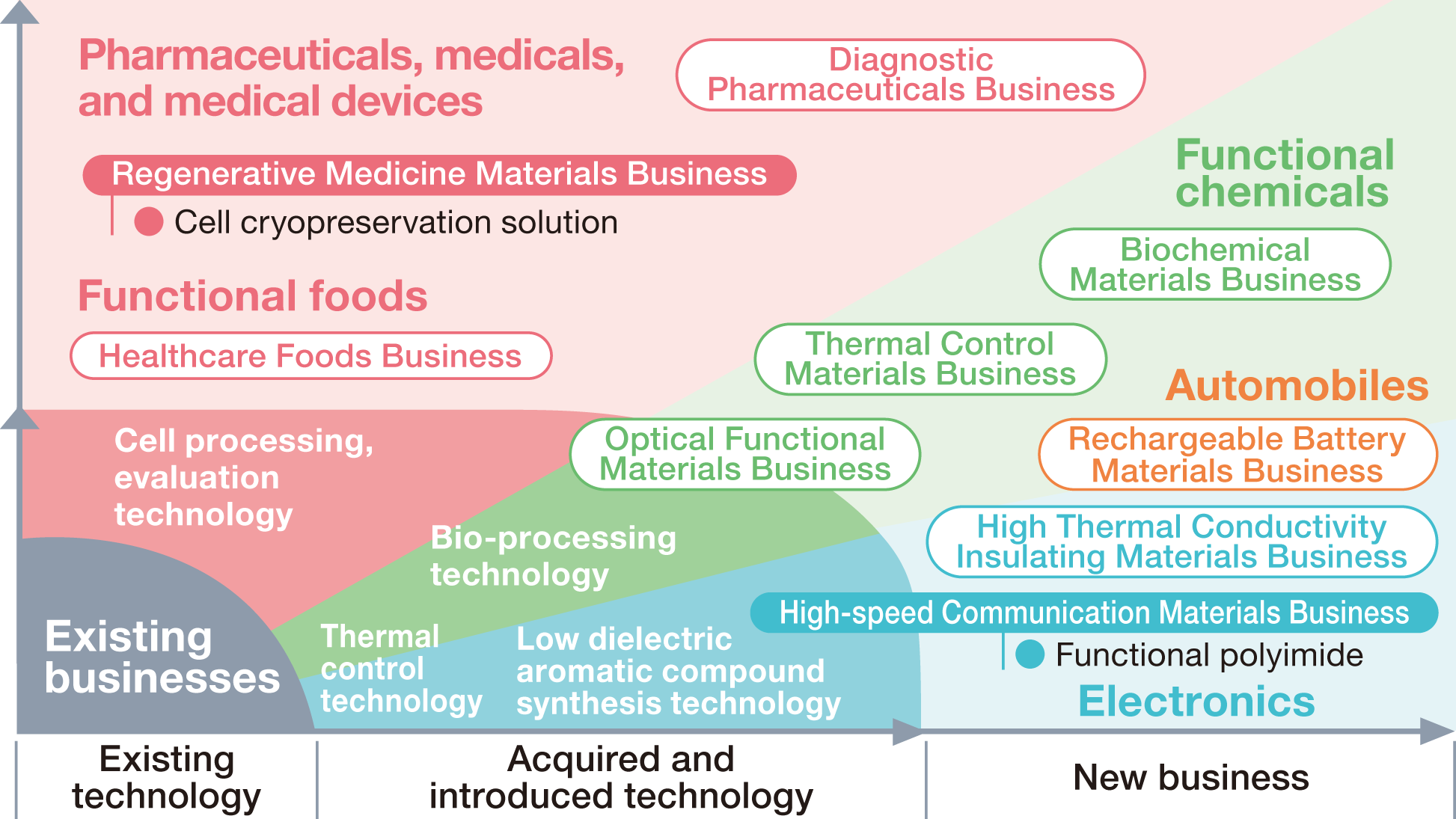
Creation of new businesses through R&D
Creating new business through collaboration with external organizations
To strengthen the six priority fields, NOF continues to participate in open innovation through external co-creation, including public call for commissioned industry-academia research, use of venture capital, and comprehensive industry-academia-government collaboration. By collaborating with external institutions, we can expect to discover new technologies and businesses unbound by existing business domains.
The public call for commissioned industry-academia research seeks research themes from universities, research institutions, startups, and other organizations in Japan and worldwide, aiming to develop new products and new technologies related to each field through co-creation with NOF and provide new value to realize a prosperous and sustainable society. We achieved results in functional chemicals in FY2021, electronics and health foods in FY2022, and medical care and medical device fields in FY2023. In FY2025, we again implemented a public call in the rapidly advancing electronics field and selected three research themes expected to offer market growth and potential applications of our technologies. We will begin research on the selected themes while continuing deeper research on themes in fields covered by previous public calls.
In January 2024, we invested in a venture capital (VC) fund of Universal Materials Incubator Co., Ltd., a VC firm that invests in superior technologies and businesses. By collaborating with investee companies as a business partner, we will cultivate promising technologies, thereby developing open innovation.
On April 1, 2024, NOF and the AIST Group (National Institute of Advanced Industrial Science and Technology and AIST Solutions Co.) jointly established the NOF-AIST Smart Green Chemicals Collaborative Research Laboratory. The target research covers a wide range of fields, including green chemicals, energy conservation, and decarbonization technologies, combining NOF’s proprietary technologies with the AIST Group’s catalyst and biomanufacturing technologies to develop environmentally harmonious chemicals. In FY2025, the collaborative laboratory jointly developed a Lewis acid catalyst and introduced a low-environmental-impact, highly productive manufacturing process for fatty acid ester products. These are being marketed as low-color and low-odor products for release agents and cosmetics applications. We will continue promoting comprehensive industry-academia-government collaboration through the laboratory to develop innovative ecological products.
Taking on the challenge of new products and technologies contributes to developing personnel who will support the Company’s future. We believe the role of the Corporate R&D Division is not only to solve immediate customer issues but also to consider the future of the entire Company and determine its direction. To enable each person in the Corporate R&D Division to become a self-motivated employee who “thinks and acts independently,” we support leadership development rather than relying solely on passive learning through internal training and education programs. We will also strive to create an environment that encourages employee growth and self-development, and will continue taking on challenges through the power of individuals and teams.
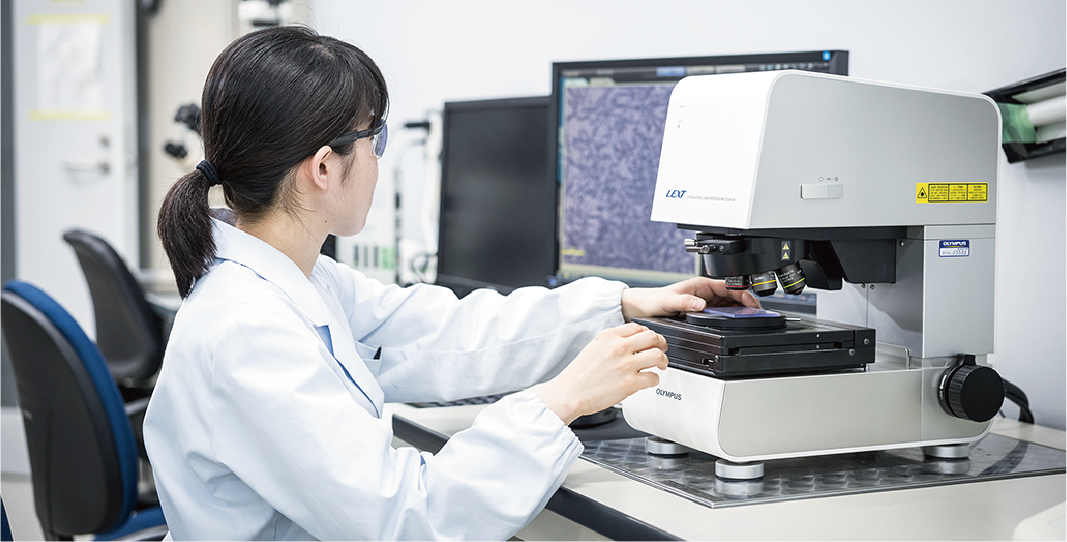
“Fairness” × Human Rights
The NOF Group takes an overarching view of human rights issues.
Externally, to develop relationships with suppliers, and internally, to improve employee collaboration.
Both will work to promote the enhancement of corporate value based on the values of “fairness.”
We are returning to the “norm” of companies and people to strengthen relationships with suppliers
and employees.
[Left] General Manager of Legal Department and Special Executive Advisor
Hiroyuki Kajikawa
[Right] General Manager of Purchasing Department
Takanori Jinnouchi
The key to corporate survival is raising awareness of fairness
Among the values of “Challenge,” “Fairness,” and “Harmony” put forth by the Group, “Fairness” is a premise that all companies and employees should be aware of. Recently, several quality fraud and data tampering issues have occurred at domestic companies. We believe an important issue for corporate survival is for employees to maintain an awareness of fairness not only for the organization but also as individual human beings and to continue making sound decisions. Also, it is NOF CORPORATION employees who are involved in sales, which is the contact point with external parties, as well as discovering new suppliers and developing new products and technologies. In order to become an organization in which individual characteristics blend together and employees can continue to work with psychological security, we will instill the concept of fairness in each employee across the Company.
In addition, we have done business with many suppliers up to present, but in order for us to decide to enter into and continue doing business with a supplier, we also require “fair and equitable treatment” from all suppliers as well. We will share the value of “Fairness” to strengthen relationships with our employees, suppliers, and all others with whom we work.
Expanding business with suppliers through permanent transactions
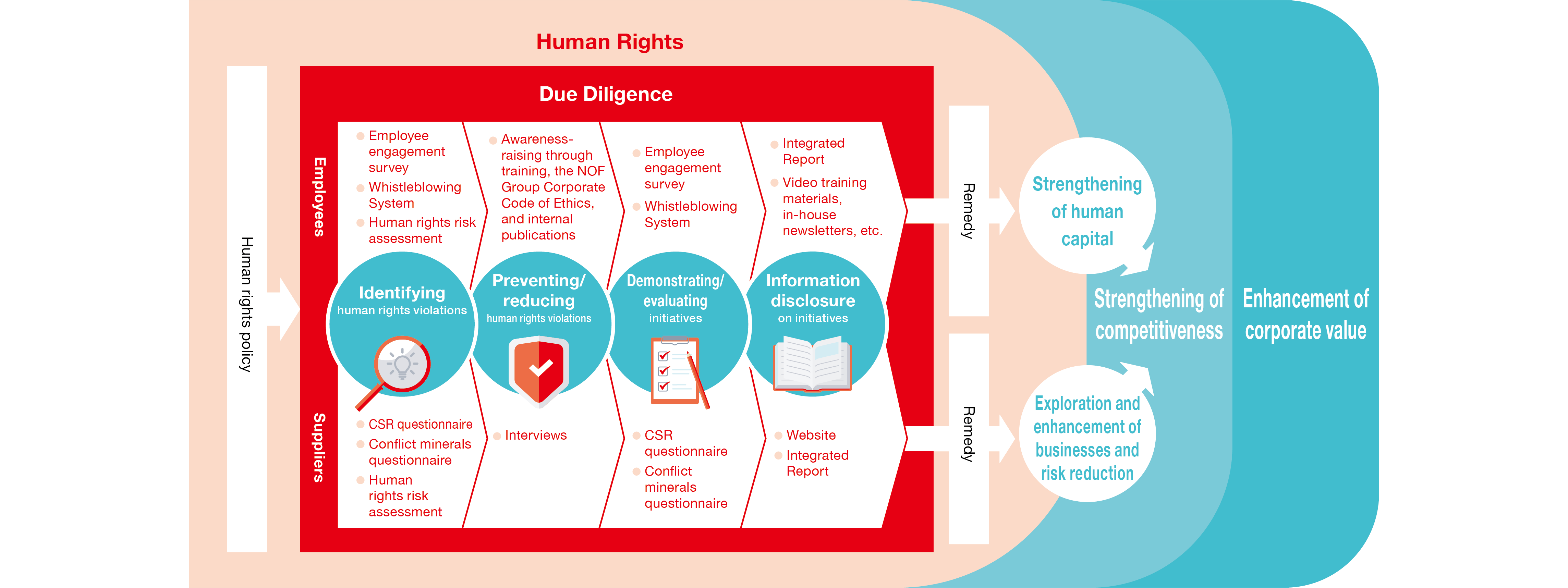
Corporate human rights issues are attracting a significant amount of attention in society. In 2022, the Ministry of Economy, Trade and Industry (METI) released the Guidelines on Respecting Human Rights in Responsible Supply Chains, and we have also developed and continually implement our own action plans toward formulating a human rights policy, conducting human rights due diligence (human rights DD), and implementing relief measures. Among them, human rights DD and implementing relief measures for relevant parties are topics that we believe the entire Company
should be focusing on.
In particular, the Purchasing Department conducts surveys and interviews with each supplier as part of its initiatives aimed at external parties. We have established a proprietary follow-up system by conducting awareness surveys on environmental conservation and occupational safety through the use of CSR* questionnaires and the responsible Conflict Minerals Reporting Template, as well as holding interviews with suppliers who have issues to discuss measures together and reevaluating the effectiveness of such measures.
Future developments include (1) actions based on the values of “Fairness” and (2) the promotion of CSR-based procurement.
In respect of actions based on the value of “Fairness,” in addition to standard evaluation items such as price and quality, we have also added environmental and human rights initiatives to our terms and conditions in order to provide a fair and equitable competitive environment and strengthen the partnership between us and our suppliers.
As for the promotion of CSR-based procurement, we will continue to conduct surveys and interviews using questionnaires and reflect CSR procurement standards in contract documents, and by doing so, reduce risks to business continuity and fulfill our social responsibility as a company. Also, through such CSR-based procurement, we will enhance the value of our brand, which will not only ensure stable procurement, but will also lead to the discovery of new suppliers and the creation of business opportunities, thereby contributing to improving the competitiveness of our businesses.
Questionnaire items
Ⅰ. Corporate governance concerning CSR
Ⅱ. Human Rights
Ⅲ. Labor
Ⅳ. Environment
Ⅴ. Fair corporate activities
Ⅵ. Quality and safety
Ⅶ. Information security
Ⅷ. Supply chain
Ⅸ. Living in harmony with local communities
Widely gathering feedback to become a company where it is easy to work
The Legal Department conducts employee engagement surveys to visualize the status of the organization. The surveys include an open-ended section that we use to solicit a wide range of feedback from employees, such as whether they have experienced any gender discrimination or whether internal systems are easy to use. Responses are then checked within the Legal Department, and measures in line with employee requests are considered and implemented as necessary. In particular, we will take measures to deal on a case-by-case basis with whistleblowing incidents that directly reflect employees’ concerns, while bearing in mind that the issues that have surfaced are just the tip of the iceberg.
Future developments include instilling in employees the values of fairness and an awareness of human rights. We do not merely subdivide internal rules, but also strive to update regulations and systems and educate employees so that they understand the significance of why the rules exist, and enhance the quality of human capital through the development of independent human resources and friendly competition among employees.
“Fairness” is a foundation that absolutely cannot be ignored in business. Through our human rights initiatives for employees and suppliers, we aim to identify and strengthen businesses and reduce risks, while enhancing market competitiveness and increasing corporate value.
“Harmony” × RC Activities
As a chemical manufacturer engaged in a wide range of businesses, the NOF Group has aimed for harmony with the natural and social environment.
We will continue to fulfill our corporate social responsibility while expanding our business, continuing to conduct our business activities in a safe and secure manner.
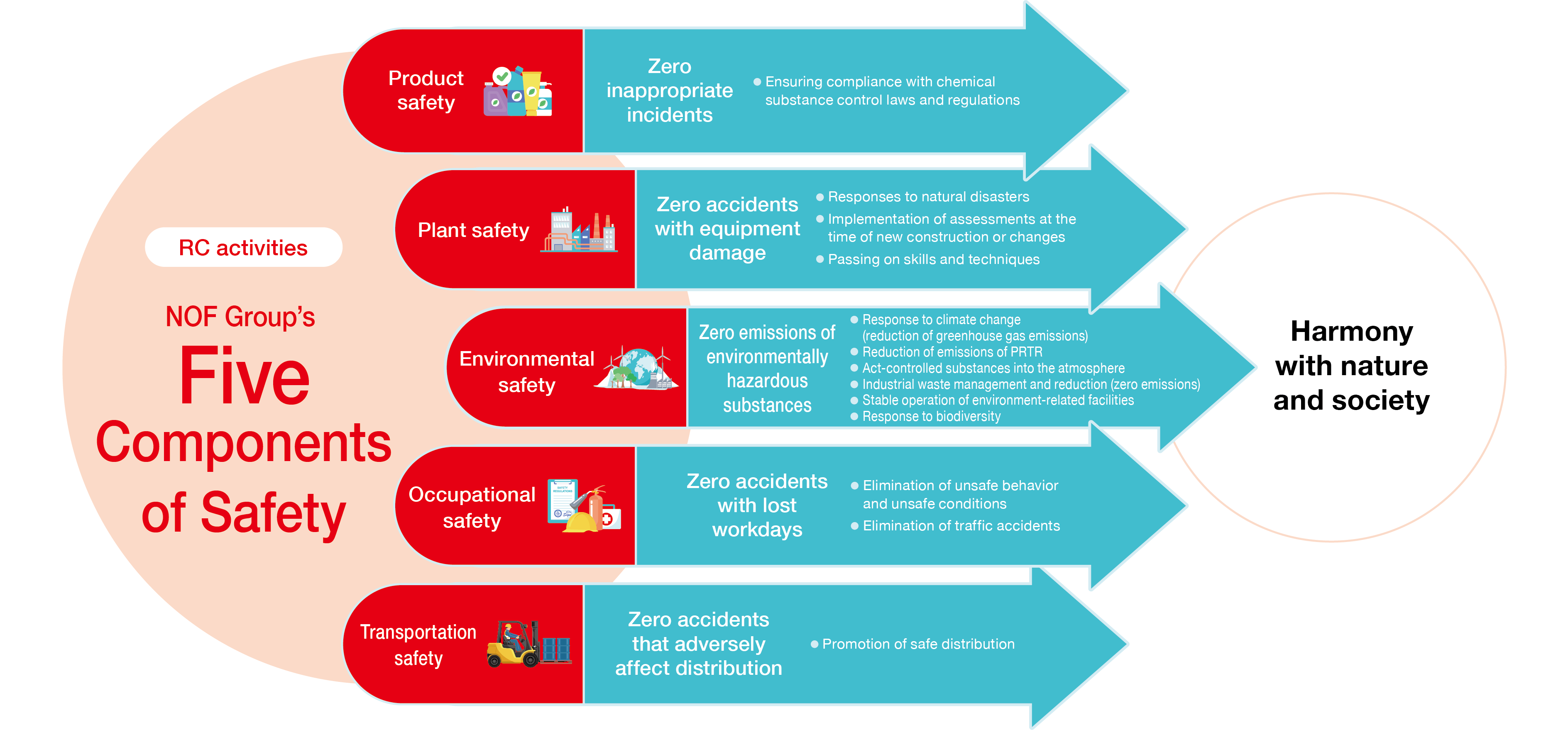
To ensure that the NOF Group continues to live in harmony with nature and society, we will aim to achieve “zero” across the Five Components of Safety.
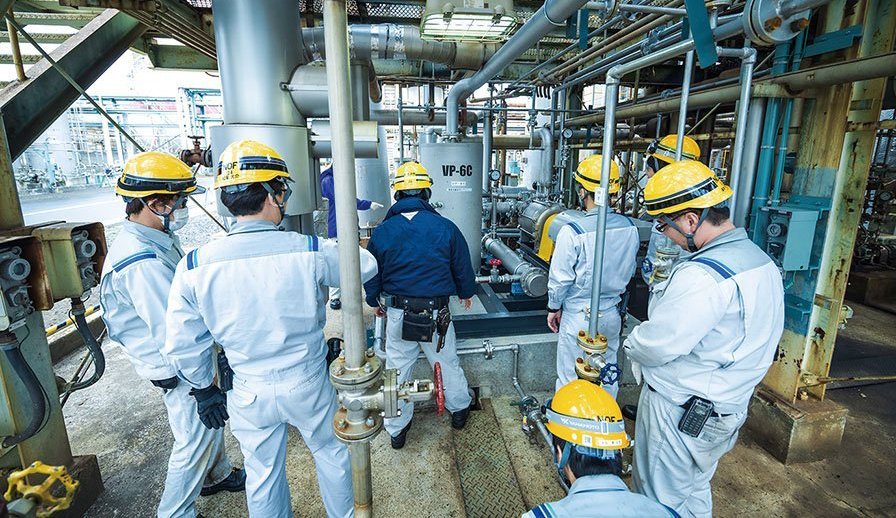
Executive Operating Officer, General Manager of Corporate Technical Division
Yoshitaka Honda
Achieving harmony through RC activities and dialogue with society
The Group, which handles chemical products, ensures the protection of the environment, health, and safety in all processes from development, manufacturing, distribution, use, and final consumption to the disposal of chemical products, and is developing Responsible Care (RC) activities to make the results thereof publicly available and engage in dialogue and communication with society. In addition, we have defined the topics of RC activities as the “five components of safety,” which comprise “environmental safety,” “plant safety,” “product safety,” “occupational safety,” and “transportation safety,” and we have been working to steadily improve the level of these activities by implementing the PDCA cycle since 1995. Further, in order to achieve harmony with the natural and social environment, we have set a final target for the five components of safety of achieving “zero” for each item.
Reduced emissions substances that impact the environment
With the Company’s “Environmental Safety,” we aim for zero emissions of environmentally hazardous substances. In response to climate change, we have set a 40% reduction from the 2013 level as a fiscal 2030 target, with the aim of achieving carbon neutrality by 2050. We are working to reduce GHG*1 emissions by accumulating and implementing measures such as converting to low-impact energy sources, electrifying non-electrified facilities, and reviewing production processes. In addition, to raise employees’ awareness of energy conservation, we will promote the efficient use of energy by visualizing energy consumption and considering the introduction of Internal Carbon Pricing (ICP).
To reduce atmospheric emissions of substances covered by the PRTR Act*2, we seek to balance this with profit growth while managing annual emissions at 170 tons or less and promoting fundamental initiatives such as reviewing manufacturing processes and improving recovery technologies.
In addition to these initiatives, we will contribute to improving the natural environment by reducing and recycling industrial waste, including plastics, and ensuring the stable operation of environment-related facilities.
- GHG: Greenhouse Gas
- In this report, we have used the notation “PRTR Act” to denote the system under which business operators notify the government of release amounts and transfer amounts of specific chemical substances in the environment, and the government publicly releases this information (PRTR system), based on the Act on Confirmation, etc. of Release Amounts of Specific Chemical Substances in the Environment and Promotion of Improvements to the Management Thereof.
Creating a safe and secure environment for all stakeholders
As a company that handles chemical substances, the Company is committed to improving the social environment for the safety and security of its various stakeholders, including employees, local communities, and customers.
In the area of plant safety, we aim to achieve “zero accidents with equipment damage” to ensure the health and safety of our employees and local residents. To achieve our targets, we are implementing measures to prevent accidents from occurring, such as conducting assessments (objective evaluation and analysis) when equipment is newly installed or modified, and passing on safety-related skills and techniques during internal training. In addition, as part of our Business Continuity Plans (BCP) to prepare for disasters and other emergency situations, we are working to both limit damage and ensure business continuity even in the event of natural disasters by implementing disaster prevention and disaster mitigation measures at our facilities and conducting regular disaster drills.
In the area of product safety, we aim to achieve “zero inappropriate incidents” by complying with laws, regulations, and guidelines and providing customers with accurate information. We have also built a Company-wide chemical substance database. Centrally managing information previously collected by individual departments in a Company-wide system improves the accuracy of information and enables prompt responses to legal revisions. To ensure that our customers can use our products with peace of mind, we will continue to take measures to ensure compliance with chemical substance control laws and regulations.
In the area of occupational safety, we aim to achieve “zero accidents with lost workdays” to protect the health and safety of workers. We strive to eliminate unsafe behavior and unsafe conditions and eliminate traffic accidents by improving sensitivity towards danger, thoroughly enforcing safety actions, and implementing education and training.
In the area of transportation safety, we strive to prevent accidents and disasters in transportation and distribution, aiming for “zero accidents that adversely affect distribution.” In particular, in order to prevent accidental chemical leaks or spills and respond appropriately in the event of an emergency, we have prepared Safety Data Sheets (SDS) and Yellow Cards and provide information to all concerned parties without fail. In addition, we strive for further safety management by providing thorough communication and guidance to distribution companies.
The Group will continue to deliver safety and security to its various stakeholders by positioning RC activities at the core of CSR.
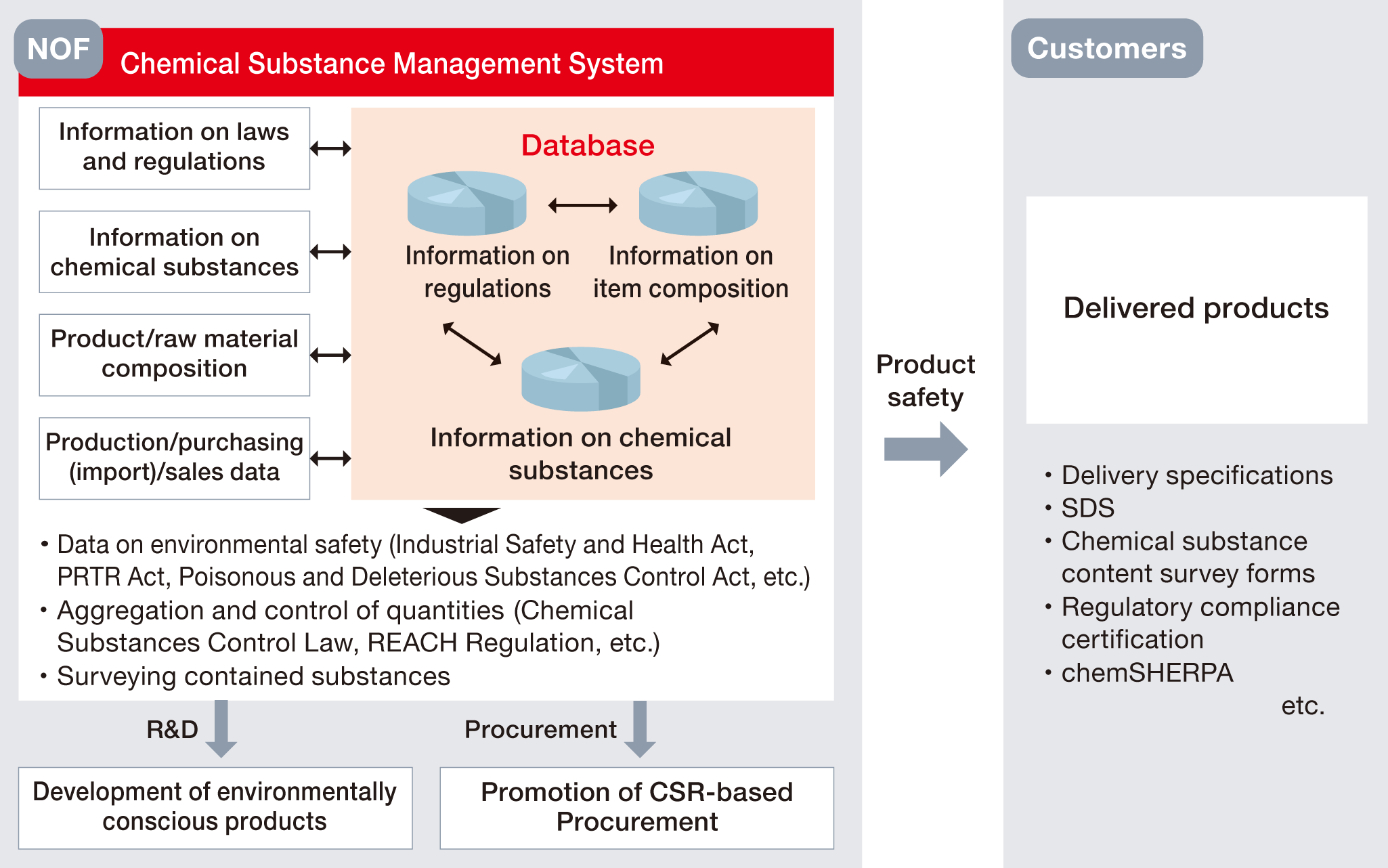
Image of composition of chemical substance database