

Environment
CSR Procurement
Policy
The importance of CSR initiatives in the international community is becoming increasingly diverse and sophisticated, and their scope is expanding beyond the company's own efforts to include the entire supply chain.
To address these issues and ensure stable and sustainable procurement, NOF has established the CSR Procurement Policy. Furthermore, we have compiled the CSR Procurement Guidelines that we implement and request our business partners to implement. We request that our suppliers understand the purpose of this policy and guidelines, and work together with NOF to implement initiatives in accordance with these guidelines.
CSR Procurement Policy
In procuring raw materials, NOF considers the entire supply chain and fulfills its social responsibilities by respecting human rights, ensuring labor conditions, complying with laws and regulations, and being mindful of environmental and safety factors (such as energy use, CO₂/GHG emissions, water use, biodiversity, pollution, waste reduction, and animal welfare). In order to realize our Corporate Philosophy, NOF is committed to dealing sincerely with its suppliers based on the concept that all of them are important partners.
CSR Procurement Policy
- We will comply with laws inside and outside Japan and engage in fair transactions based on corporate ethics.
- We will engage in procurement in a manner that is responsible toward the environment, safety, health, and quality and is friendly to the global environment.
- We will provide fair business opportunities to entities both inside and outside Japan when selecting suppliers.
- We will consider quality, cost, and delivery and select our suppliers by making a fair judgment.
- We will respond quickly to emergencies and engage in the appropriate disclosure of information.
Promotion of CSR-based Procurement
CSR Procurement Guidelines
NOF established CSR Procurement Guidelines in FY2022 and is communicating with suppliers to ensure thorough implementation of the Guidelines.
The human rights section of the Guidelines states, “Should any kind of discrimination, harassment, forced or child labor, or other inhumane behavior come to light, we will take appropriate steps to remedy the situation.” It also states, “We pay attention to working hours, guarantee the payment of appropriate wages and allowances in compliance with laws and regulations, and respect the freedom to join a union and to engage in protest actions.”
The Guidelines’ section on environmentally conscious procurement states, “We push ahead with procurement that gives consideration to environmental preservation, resource conservation and safety, towards the goal of making sustainable society a reality.”
Incorporation of CSR-related clauses in basic purchasing contracts
When signing a new basic purchasing contract, we decided to add a clause stating efforts to comply with the NOF Group’s CSR Procurement Policy and CSR Procurement Guidelines.
CSR questionnaire
In the procurement unit, we provide our main suppliers with necessary explanations on NOF’s CSR Procurement Policy and commence questionnaires on the status of CSR activities at our main suppliers, using the global compact format to improve the objectivity of the questionnaire.
Most recently, we surveyed our major suppliers from fiscal 2023 to 2024 and achieved a coverage rate of 92% based on purchase amount. The table below shows the distributions of the score rates for the human rights section and for all items in the CSR questionnaire. In FY2025, we held interviews with suppliers selected based on (1) their overall score rate and (2) their human rights item score rate, encouraging them to make improvements.
As a target under the 2028 Mid-term Management Plan, we set a KPI of an improvement rate*2 of at least 75% among the 24 suppliers*1 interviewed under the 2025 Mid-term Management Plan.
Survey score
| 90 points or above | 70 to 89 points | 50 to 69 points | Below 50 points | |
|---|---|---|---|---|
| Human rights score distribution | 56% | 16% | 18% | 10% |
| Score distribution for all items | 63% | 25% | 9% | 3% |
Sustainable procurement report
| FY2025 | |
|---|---|
| Percentage of selected suppliers interviewed and encouraged to make improvements | 96% (24 of 25 companies) |
| Number and percentage of Purchasing Department staff who received sustainable procurement training | 6 of 6 people, 100% |
- Selected with a focus on (1) overall score rate and (2) human rights item score rate
- Percentage of companies showing improvement in either applicable item under (1) or (2)
Fair trade practices
The NOF Group promotes fair competition and fair trade by stipulating compliance with laws such as the Antimonopoly Act and the SME Transactions Act, as well as the prohibition of bribery, in the Global Compliance Manual and the Compliance Manual (Japan version), and by providing ongoing employee education. The above-mentioned initiatives are further promoted under the NOF Group’s Anti-Bribery Policy.
In addition, in order to avoid the risk of violations of “prevention of delay in payment” and “prohibition of reduction of payment” under the Subcontract Act, the NOF Group has standardized payment terms and conditions that comply with the Subcontract Act in a comprehensive and uniform manner at all Group companies in Japan.
Green procurement
NOF has added “environmental friendliness” to its previous criteria for procurement of materials, which are “quality, cost and delivery time.” In order to confirm the status of suppliers or products in terms of environmental measures, and to procure products with lower environmental load from suppliers that make greater environmental efforts, we have established a list of managed substances, based on which we conduct a survey of suppliers. The managed substances list is determined based on the POPs Convention, RoHS Directive, REACH Regulation, and Japan’s Chemical Substances Control Law, Industrial Safety and Health Act, and Poisonous and Deleterious Substances Control Act, and is reviewed as appropriate.
Business Continuity Plan (BCP)
As part of our BCP, our procurement unit is striving to purchase multiple raw materials and reviewing our supply chain in order to ensure stable raw materials procurement in the event of an emergency, such as a natural disaster, equipment malfunction, or transportation disruption.
Procurement of sustainable palm oil
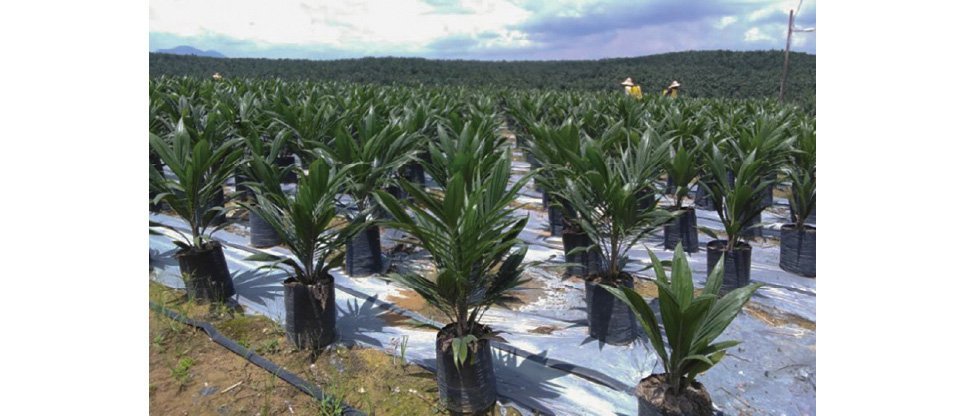
Palm oil is now the most widely produced fat in the world, and it is difficult to completely avoid palm oil in daily life. However, the rapid increase in the number of palm plantations and improperly managed plantations have caused environmental problems such as deforestation of rainforests, smoke pollution, and loss of biodiversity in their producing countries and surrounding areas. There are also social problems such as conflicts with Indigenous people over land and child labor. As the NOF Group expands its business globally, we support and respect international norms such as the Declaration on Fundamental Principles and Rights at Work of the International Labor Organization (ILO), OECD Guidelines for Multinational Enterprises on Responsible Business Conduct, the UN International Bill of Human Rights, the UN Guiding Principles on Business and Human Rights, the Ten Principles of the UN Global Compact, and the Government of Japan’s National Action Plan on Business and Human Rights. To fulfill our responsibility to respect human rights throughout all corporate activities, including the prohibition of child labor, forced labor, and human trafficking, as well as the exercise of freedom of association and the right to collective bargaining, we established the NOF Group Human Rights Policy in fiscal 2021, which applies to all executives and employees of the Group. For this, we respect not only the international norms listed above, but also the culture, customs, history, and labor-related laws and regulations of the countries and regions in which we do business. We also began conducting human rights risk assessments in FY2025.
In order to be involved with palm oil to sustain the livelihoods of producers and consumers while considering the environment, NOF joined the Round-table on Sustainable Palm Oil (RSPO) in FY2012 and obtained supply chain certification from the organization in FY2014. NOF, a founding member of the Japan Sustainable Palm Oil Network (JaSPON) which was launched in Japan in 2019, conducts activities to procure sustainable palm oil. We also visit RSPO-compliant palm plantations on a regular basis to communicate directly with the farmers and confirm that there are no problems with quality or CSR-related items (human rights, environment, etc.). We will continue to aim to achieve procurement based on the NDPE*1 while actively promoting the use of RSPO-certified oil, thereby advancing our activities with consideration for environmental and human rights concerns. The ratio of RSPO-certified oil in FY2025 was approximately 11%. We aim to procure 100% certified sustainable palm oil by FY2030.
Response to responsible mineral procurement
With regard to conflict minerals (3TG*1) that may have an impact on human rights and other issues, we use the Responsible Minerals Initiative (RMI*2) prescribed Conflict Minerals Reporting Template (CMRT*3) and conduct questionnaire surveys of all key business partners. We conduct interviews with suppliers who have indicated that 3TG have been intentionally added or used and remain in their products, and where the refineries cannot be identified, to assess the presence of any human rights risks. Furthermore, starting from FY2023, we have initiated a survey of our key business partners, using the Extended Mineral Reporting Template (EMRT*4), a unified format for target minerals cobalt and natural mica.
- Refers to the four minerals of tin, tantalum, tungsten, and gold extracted in the Democratic Republic of Congo and neighboring countries
- Abbreviation for Responsible Minerals Initiative
- Abbreviation for Conflict Minerals Reporting Template
- Abbreviation for Extended Minerals Reporting Template
Education on CSR procurement
NOF holds meetings for materials-related personnel twice a year, which are attended by materials-related personnel from the Head Office and plants, to exchange information and discuss solutions to issues related to CSR procurement. In addition, with the aim of extending the CSR procurement activities implemented at NOF to our affiliates, a meeting of materials-related personnel of manufacturing-related affiliates is held once a year with the participation of materials-related personnel from those companies.
Establishment of external whistleblowing contact points
The NOF Group recognizes compliance as a foundation that supports the company and believes it is crucial to prevent or promptly correct incidents that violate the NOF Group Corporate Code of Ethics, or involve human rights abuses. To this end, we have established contact points for whistleblowing outside the Company, including our business partner suppliers.
Participation in the Declaration of Partnership Building
NOF announced its “Declaration of Partnership Building” in support of the aims of the “Council on Promoting Partnership Building for the Future,” promoted by the Cabinet Office, the Small and Medium Enterprise Agency, and others. We aim to build new partnerships by promoting collaboration, co-existence, and co-prosperity with our supply chain business partners and businesses that create value.

Risks and Opportunities
Risks and opportunities for CSR-based procurement
NOF promotes CSR procurement to contribute to a sustainable society. Although this entails the risk of higher costs in the short term, from a long-term perspective it leads to a sustainable business and earns the trust of consumers and investors.
Risks and opportunities for CSR-based procurement
| Risks | Opportunities |
|---|---|
| Procurement risks include the risk of not being able to conduct procurement on schedule and at the planned prices due to various factors such as extreme weather conditions, natural disasters, geopolitical influences, and international conflicts. There is also the risk that sudden changes in demand or supplier problems may undermine stable procurement and disrupt the supply of products to the market. We also need to fulfill our social responsibilities as a company by realizing sustainable procurement, giving full consideration to environmental aspects such as moving away from fossil fuels, global warming prevention, and biodiversity conservation, as well as social aspects such as safety, health, labor environment, and human rights. Amidst this, if for some reason in the supply chain, the NOF Group’s commitment to sustainable and responsible sourcing is deemed insufficient, it could lead to a loss of trust in the NOF Group. |
CSR-based procurement is important for procuring raw materials to contribute to a sustainable society. There are many implications and benefits to implementing CSR-based procurement. The important points are indicated below.
We believe that CSR-based procurement is an essential activity for the long-term sustainability and social responsibility of a company, and can lead to increased corporate value. |
Procurement practices
At NOF, purchases of main and auxiliary raw materials are made, in principle, by the Head Office. However, for items that are more advantageous to purchase at a particular location due to the location conditions of the supplier or the particulars of the transaction, items that require prompt delivery, or items that are purchased in small quantities, purchases are made by the works or plant (location-based purchasing).