

Environment
Biodiversity Conservation

Policy
Policy on natural capital
NOF’s initiatives to protect natural capital
The NOF Group places great importance on actively protecting and restoring natural capital. To this end, we have formulated the following policies.
- In order to minimize the impact of our business activities on natural capital, we conduct environmental impact assessments, identify risks, and implement countermeasures.
- We require our employees to comply with international guidelines, laws, and regulations related to natural capital conservation and to engage in environmental conservation.
- We require our employees to comply with international guidelines, laws, and regulations related to natural capital and to work for environmental conservation.
- We provide educational programs to raise environmental awareness and educate employees and relevant stakeholders on the importance of natural capital conservation.
- We cooperate with local communities and participate in local ecosystem conservation activities and various projects to restore natural capital.
Through these initiatives, we will contribute to safeguarding natural capital and help realize a more sustainable future.
Biodiversity Conservation
Progress and results for biodiversity conservation
In addition to “forest planting” through roadside greening and forest creation by thinning and pruning forests owned by the NOF Group, we are implementing plans that contribute to biodiversity at sites across Japan through activities such as protection efforts mainly targeting endangered species, removal of invasive plants, and donation activities.
Tree planting at Yufuin NOF forest
At our Oita Works, as part of our biodiversity conservation initiatives, we endorsed Oita Prefecture’s “Forest Creation with Corporate Participation” program and carried out tree-planting activities in the forests of Yufu City. This initiative involves concluding agreements with landowners and forest cooperatives through mediation by Oita Prefecture, conducting tree planting and thinning, and thereby conserving forest environments and watershed areas.
The site is a former cedar logging area at the foot of Mt. Yufu, also known as the “Mt. Fuji of Bungo.” Approximately 2.8 hectares have been named “Yufuin NOF Forest,” where 2,000 broadleaf trees, including sawtooth oaks, are being planted. On March 15, 2025, under the guidance of forest cooperative members, NOF employees and their families held a tree-planting ceremony in which they planted 200 saplings, equivalent to one-tenth of the total plan. Guests from other companies in the local industrial complex also attended the event, generating a ripple effect right from the start.
Yufuin NOF Forest is expected to absorb about 160 tons of CO₂ over five years as the saplings grow. It is also expected to function as a watershed conservation area for the Oita River, which is the main water source for Oita citizens. We will help realize a sustainable future through contributions to the forestry cycle of cutting, using, and planting trees.


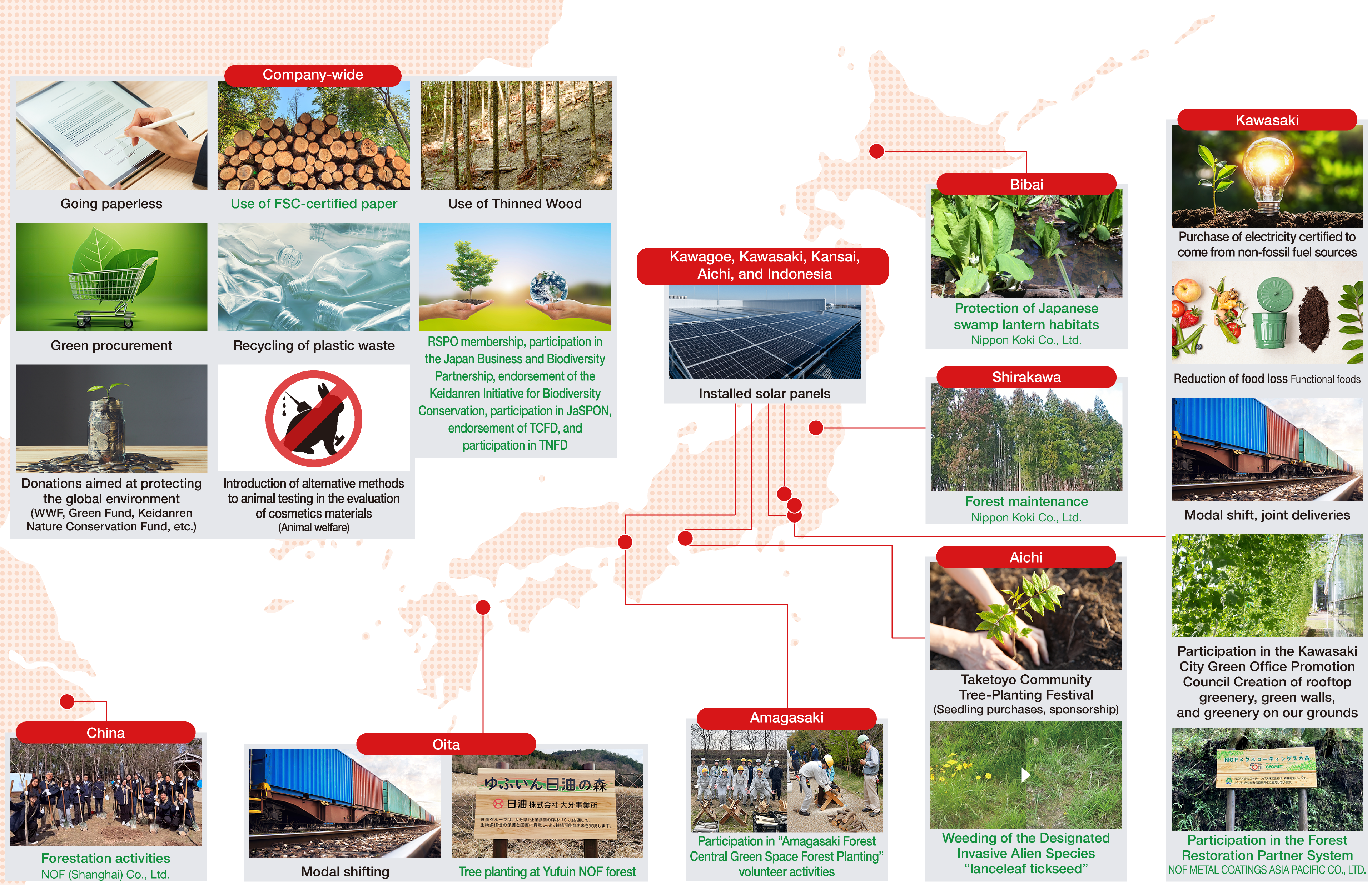
Participation in “Amagasaki Forest Central Green Space Forest Planting” Volunteer Activities
(Since 2017)
In FY2025, 25 employees from the Amagasaki Plant continued to participate in the “Amagasaki Forest Central Green Space Forest Planting,” one of the initiatives under the “Amagasaki 21st Century Forest Project” promoted by Hyogo Prefecture. This year, activities focused on thinning and pruning to keep the forest healthy and organizing felled timber. Through these forest creation activities, we will continue contributing to environmental improvement in the waterfront area and the conservation of biodiversity.

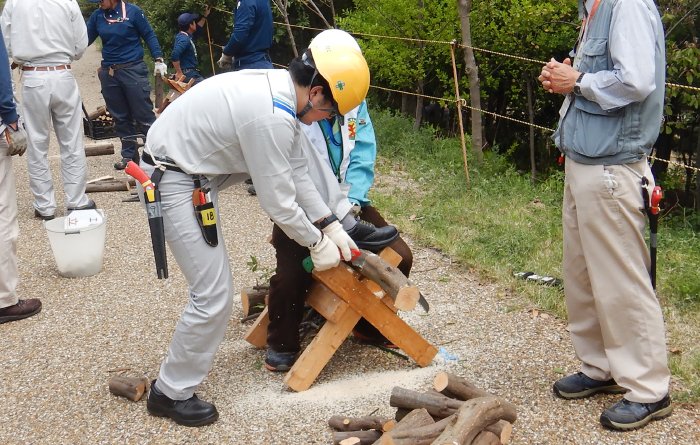
Participation in the Forest Restoration Partner System under the Kanagawa Forest Restoration 50-Year Project
The Kanagawa Forest Restoration 50-Year Project is an initiative to revitalize forests measuring about 95,000 hectares, or about 40% of the prefecture's land, from the prefecture’s Mount Oyama and Hakone mountains to forest land in satoyama areas and urban areas. The objective is to prevent the devastation and erosion caused by lack of care and to pass on the rich blessings of the forests to the next generation. NOF METAL COATINGS ASIA PACIFIC CO., LTD. started to support forest maintenance on an area of about 12 hectares (equivalent to about two Tokyo Domes). The forest areas will absorb about 247 tons of CO₂ over five years. Moreover, the decision has been made to name a portion of the forest designated by the prefecture as “NOF METAL COATINGS Forest.” Going forward, as a partner company, we will conduct events for forest maintenance, nature observation, and more. The forest will be used as a place to promote health and deepen friendship with employees and their families, thereby contributing to the protection of natural capital and environmental preservation.

Forestation activities
NOF (Shanghai) Co., Ltd. (NSC) actively participates every year in volunteer and environmental protection activities in Shanghai to instill the importance of corporate social responsibility among employees and make tangible contributions to local communities. In March 2026, with an introduction from Shanghai Dingpan Tourism Culture Development Co., Ltd., which promotes the development of tourism culture, all employees carried out a tree-planting activity at Shanghai Bay National Forest Park to help protect the coastal environment near Shanghai.


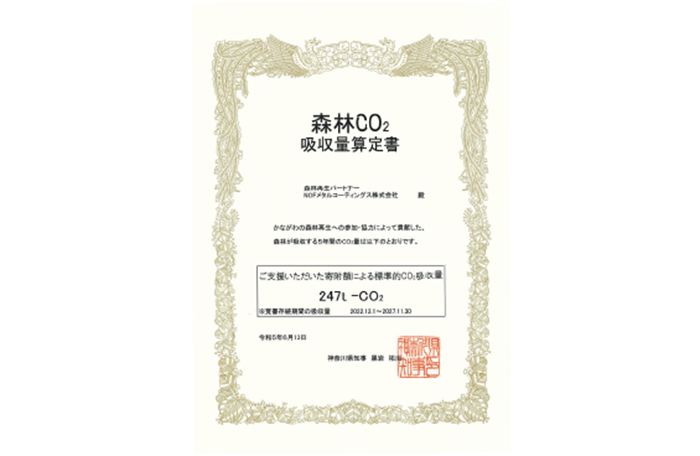
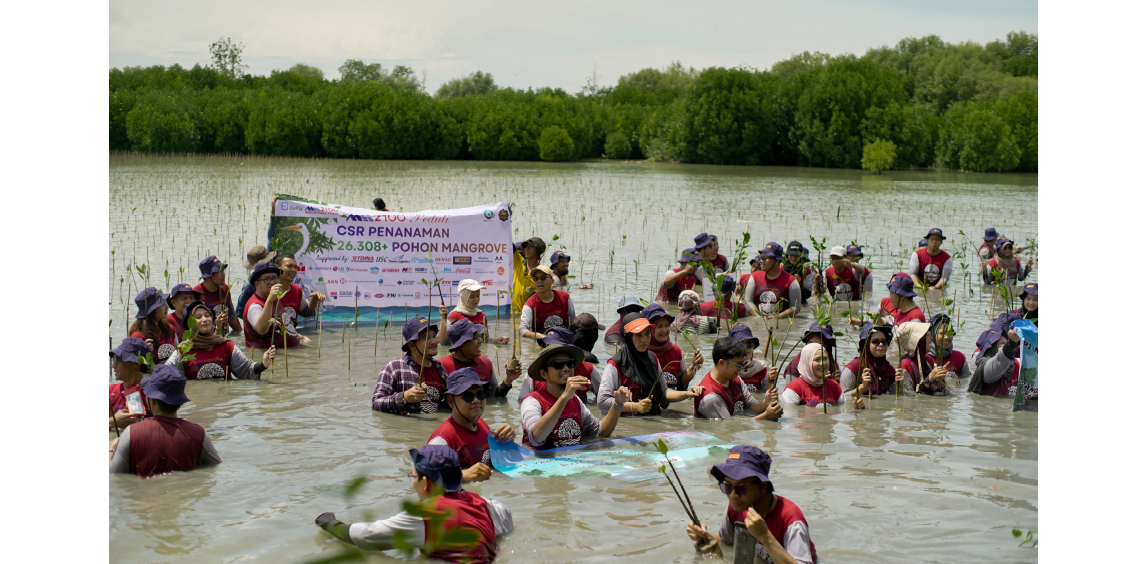
Mangrove Planting Program
In November 2025, PT. NOF MAS CHEMICAL INDUSTRIES (NMC) planted more than 26,000 mangrove trees under a joint CSR program involving the industrial park management office, tenant companies, and the local community. This activity not only contributes to controlling coastal erosion and enhancing biodiversity through ecosystem restoration but also supports farmers and promotes local economic development. Through close collaboration with diverse stakeholders across boundaries, we will continue taking on global environmental goals and co-creating a sustainable future in which society and nature coexist in harmony.
Forest Maintenance and Expansion of the Habitat of Daylily
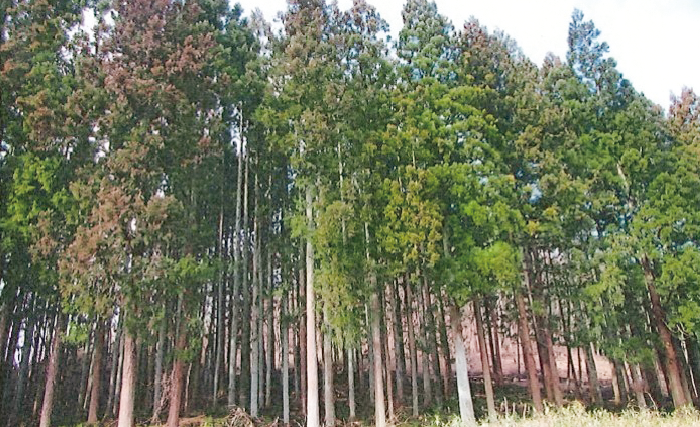
At the Shirakawa Plant of Nippon Koki Co., Ltd., forest maintenance through thinning has been carried out continuously, and an area of 3.0 hectares was maintained in FY2025. For this maintenance, a notification concerning logging domestic trees was submitted to Nishigo Village in Nishishirakawa District, the relevant authority, and the village issued a “Notice of Compliance with the Logging and Post-Logging Reforestation Plan.” This plant plans to continue such small-scale forest maintenance in the future.
The plant is also promoting efforts to expand the habitat of daylily, which grows naturally on the premises. This fiscal year, maintenance of the access path to the natural habitat was completed. Over the next several years, viewing facilities, including boardwalks, are scheduled to be installed.
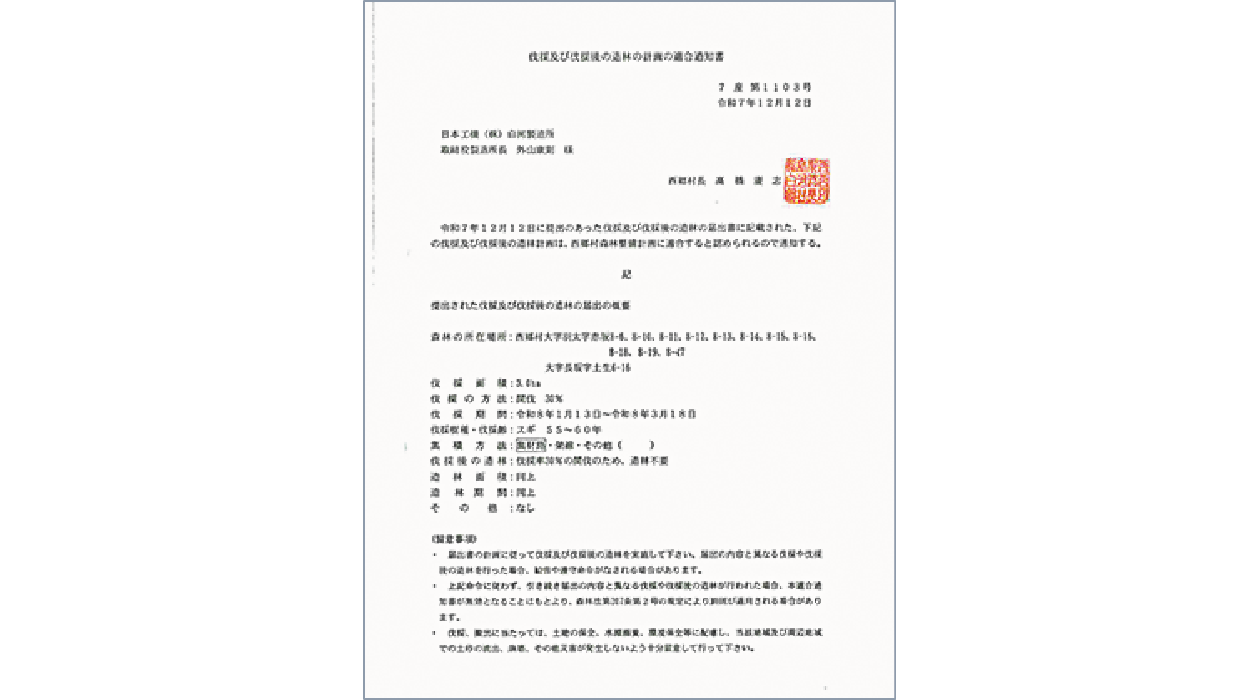
Notice of Compliance with the Logging and
Post-Logging Reforestation Plan
Activities to protect Japanese swamp lantern clusters
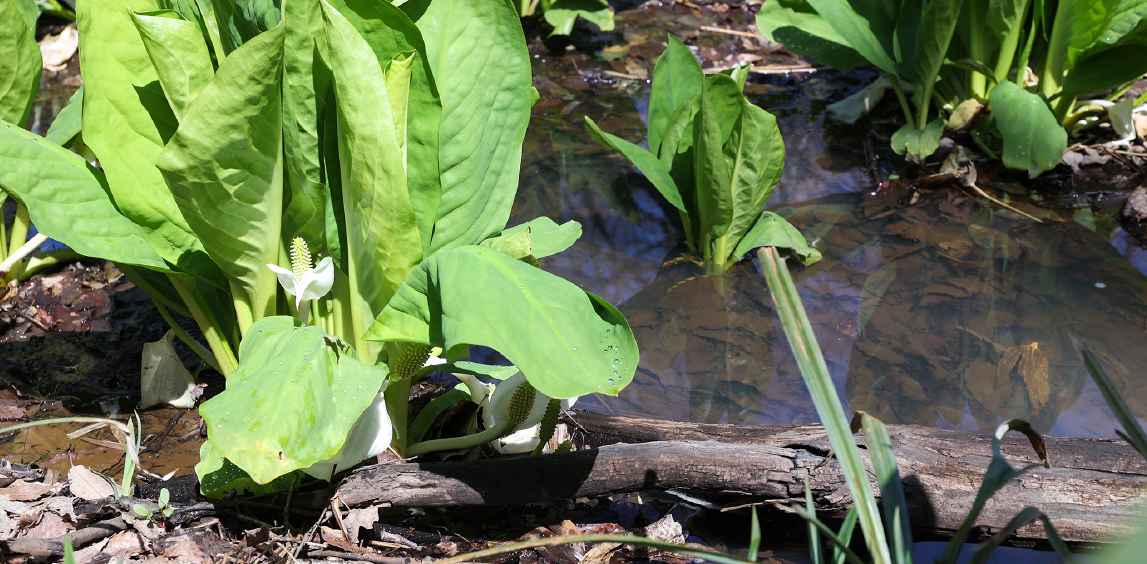
The Japanese swamp lantern, which is known in Japan from the children’s song “A Memory from Summer,” is an alpine plant that grows near water. On the grounds of Nippon Koki’s Bibai Plant (Bibai City, Hokkaido Prefecture), which covers a vast area of about 43 hectares, or 9.2 times the size of the Tokyo Dome, there are clusters of Japanese swamp lanterns in a wetland where sunlight filters through the trees. Surrounded by Japanese white birch and other trees and water, this rich ecosystem is carefully protected with the continuous observation of employees.
Use of FSC-certified paper
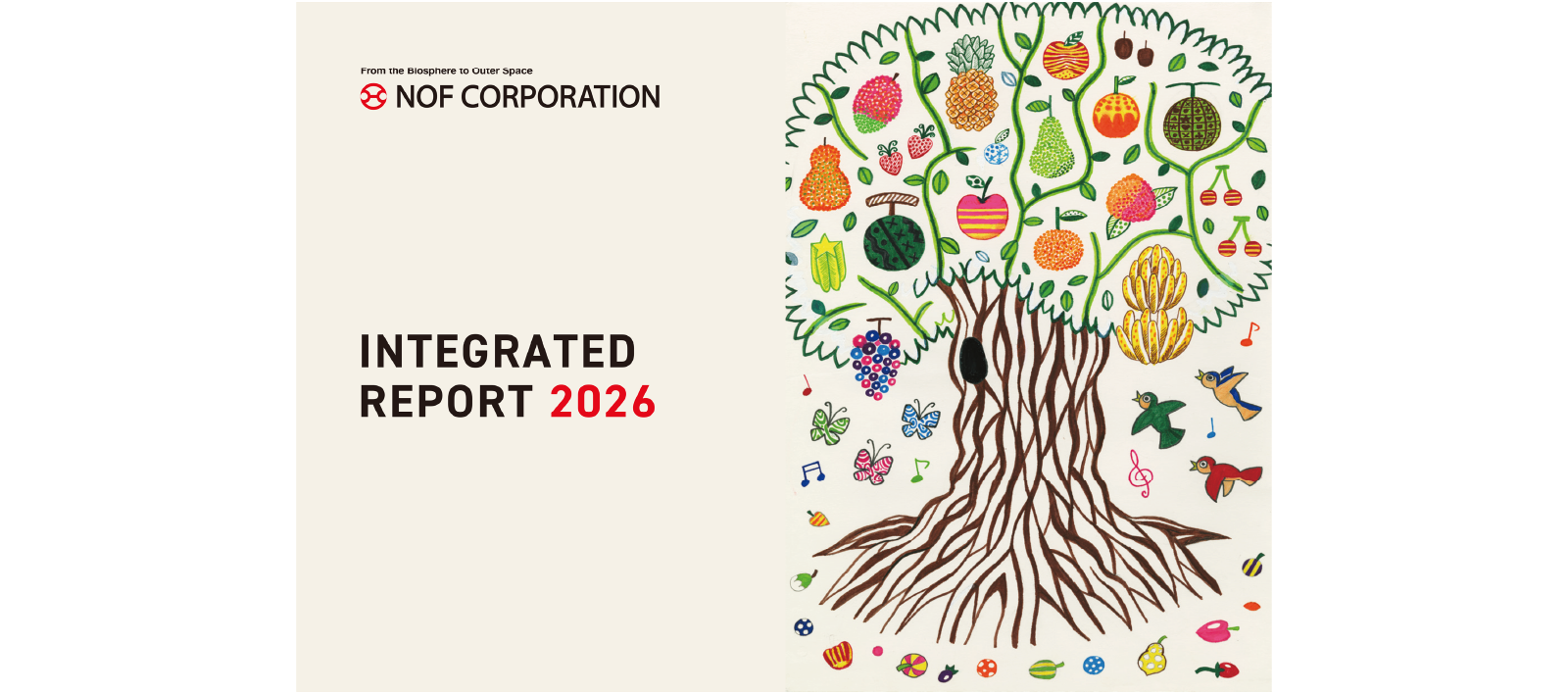
FSC certification is an international system that certifies “responsible forest management” for the purpose of sustainable forest utilization and conservation. The NOF Group uses FSC-certified paper for its Integrated Report, Notice of General Meeting of Shareholders, company profile, and in-house newsletters, and cooperates in activities to protect forests.
Use of Thinned Wood
Trees felled through thinning are often left in the forest due to profitability issues. In recent years, however, the use of thinned wood has been promoted to make effective use of resources and reduce the risk of the wood being washed away by typhoons and mudslides. The NOF Group uses paper made from thinned wood for flyers announcing the publication of its integrated report.
Weeding of specified invasive non-native plants
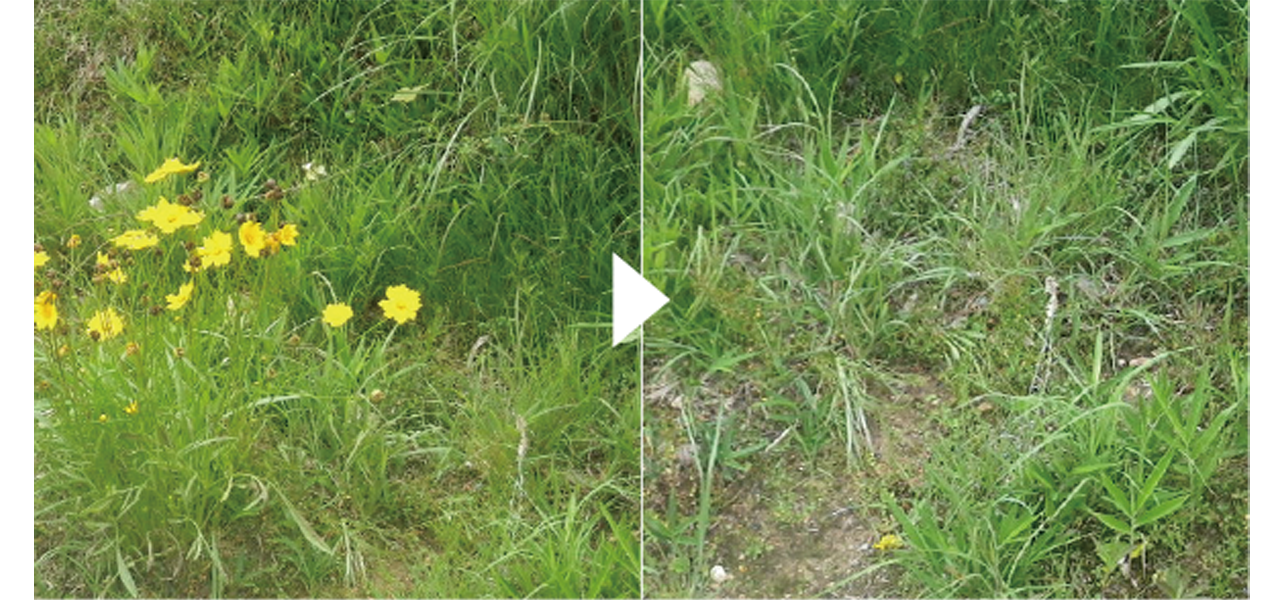
The perennial plant “lanceleaf tickseed,” a member of the Asteraceae family native to North America, was introduced from overseas as an ornamental and greening plant. However, in 2006 it was designated as a “Designated Invasive Alien Species” under the Act on the Prevention of Adverse Ecological Impacts Caused by Designated Invasive Alien Species because of its strong reproductive capacity and potential to seriously impact the ecosystem in Japan. Cultivation, transport, sale, and release into the wild are prohibited. Local governments throughout Japan are calling for extermination of this plant through their websites and other means. At NOF’s Aichi Works, lanceleaf tickseed grows in various parts of the grounds, and has increased dramatically in recent years. Therefore, the entire plant is conducting extermination activities.
CSR-based Procurement
Since fiscal 2010, we have designated promotion of biodiversity initiatives as one of our Responsible Care (RC) activities. From October 2012, NOF joined the Round-table on Sustainable Palm Oil (RSPO*) under the “Palm Oil Processors and Traders” category to contribute to the healthy development of the palm oil industry. Since 2014, the NOF Group has participated in the Japan Business and Biodiversity Partnership, which promotes initiatives for biodiversity by business operators. NOF currently endorses the Declaration of Biodiversity and Action Policy by Keidanren (2018 revised edition). Furthermore, in April 2019, NOF became a founding member of the Japan Sustainable Palm Oil Network (JaSPON), which comprises 18 companies and organizations including manufacturers, retailers, and non-governmental organizations, and also engages in activities to encourage the entire industry to procure and use RSPO certified palm oil.